
The Paradox of Selflessness: Starting from Within
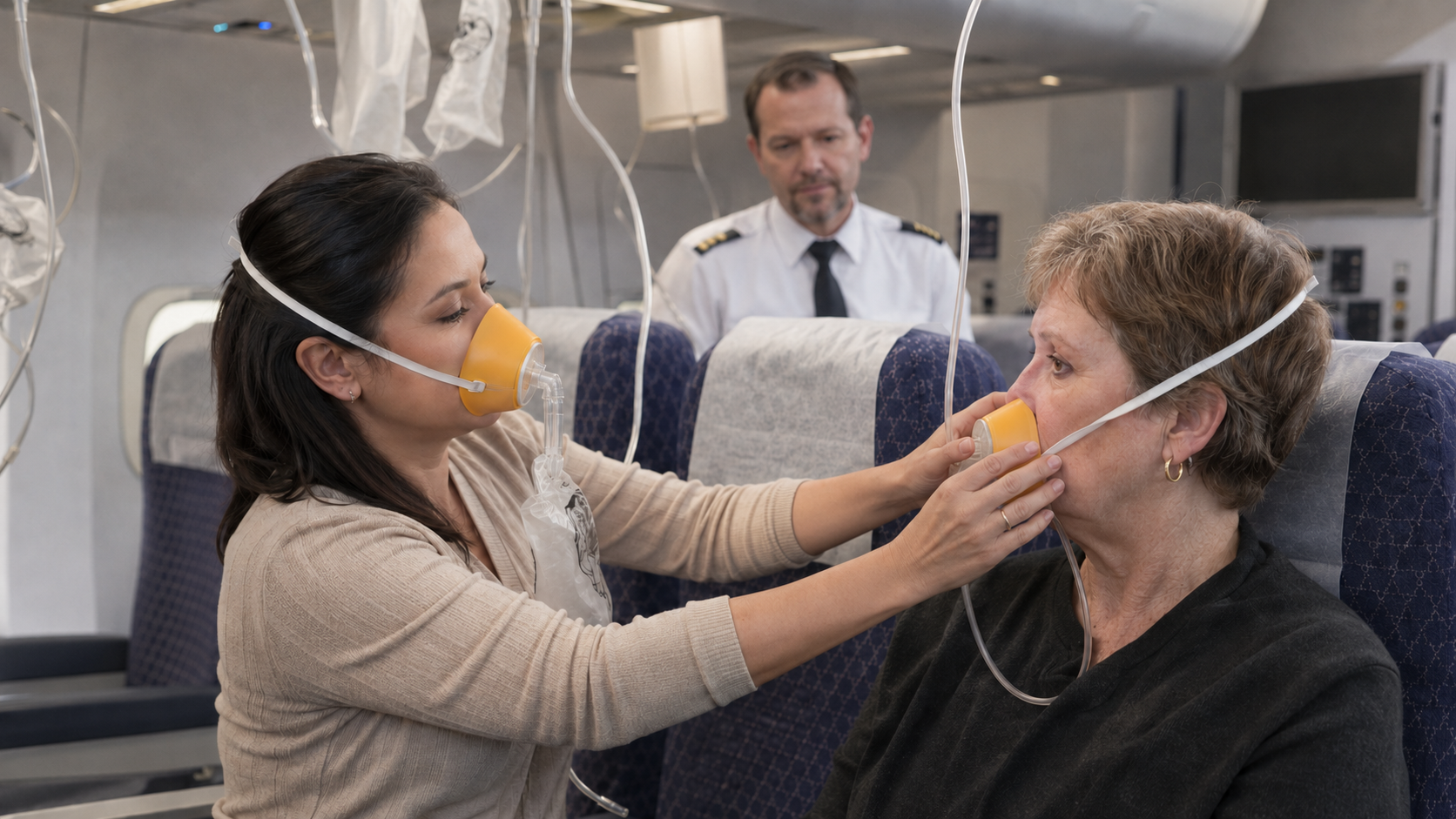
There is a tension at the heart of the happiness project. On one side stands the impulse toward generosity and service, the desire to help others that so many wisdom traditions identify as the deepest source of meaning. On the other sits a more practical counsel: that we cannot pour from an empty vessel, that we must care for ourselves first. We hear this rule in the safety instructions given before every flight: put on your own oxygen mask before helping the person beside you. To the casual observer, these two pieces of advice seem to pull in opposite directions. How do we reconcile them? We don't, because they were never in conflict. The resolution lies in distinguishing intention from application, strategy from tactics.
The intention, the direction toward which we orient our purpose, is expansive and unconditional: to reduce suffering and increase happiness for every being we encounter, and ultimately for every being in existence. This is not an idle thought or an unrealistic ambition. It is a motivation that begins with the people we love, extends to strangers we will never meet, and eventually reaches even those toward whom we once carried resentment. The aspiration holds no discrimination and recognizes no limit.
But an aspiration is not a plan. A direction tells you where you are going; it does not tell you where to begin. And every journey, however vast, must start somewhere. That point of origin is the self.
If you wish to relieve suffering in the world, begin by relieving suffering in yourself. Understanding how to ease suffering, and having practiced it firsthand, makes us more effective at carrying that relief outward, the way a chef tastes the food before serving it to others. From there, the circle of care widens: first to those closest to you, then to acquaintances and neighbors, then to strangers, and eventually to those you once regarded as adversaries. This is not selfishness dressed in noble language, because selfishness is what happens when the aspiration stops at the self. Starting at the self and moving outward is simply the sequence that works, the one that sustains itself. Compassion, like warmth, radiates from a source. You cannot radiate what you have not yet generated.
This is where the distinction between strategy and tactics becomes essential. The strategy, the overarching intention, is to help every being in this universe, compassion radiating outward like sunlight falling on all things without discrimination. The tactic, the daily practice, is to begin at the point of origin, the self, and move outward from there. We often call this focus on the self "inward," but that word only makes sense because our attention usually starts further out. Begin instead from the center, and there is no inward left to speak of. There is only outward. Confusing the two, mistaking the starting point for the destination, creates either paralysis or self-destruction. When we fixate on the self as the final goal rather than the point of departure, the outward vector stalls. The motivation to help others dims. Effort spent purely in service of the self, severed from that larger intention, brings no lasting fulfillment. Worse, it can curdle into the very selfishness it was meant to guard against, contracting rather than expanding our capacity for joy.
The example that teaches me most is the expansion of the universe. Cosmologists trace its history back roughly 13.8 billion years to an extraordinarily hot, dense initial state, from which space itself has been expanding ever since. Energy, matter, and structure did not appear all at once across the cosmos; they radiated outward from a single origin, building complexity and scale across billions of years. Compassion works the same way. It begins at one point, small and concentrated, and radiates outward without end. Though the starting point is modest, it holds all the potential energy needed to build a universe, and its trajectory is boundless.

Consider the experienced pilot who maintains a rigorous routine of self-care, not out of vanity but because she understands that her passengers depend on the skill and presence she brings to the cockpit. She invests in herself as an act of service, knowing that exhaustion makes her dangerous and clarity makes her effective. Her self-care is not separate from her calling; it is the foundation of it. Over time, that investment radiates outward: she mentors younger pilots, advocates for systemic change in how wellbeing is practiced, and eventually helps reshape the culture of an entire industry. A personal discipline has become a force for collective transformation.
Return to the instruction given before every flight. The parent who secures her own oxygen mask before helping her child is not trying to be a hero, and the instruction was not invented by motivational speakers. It is a matter of physics and physiology: a parent who loses consciousness cannot save a child. The instruction exists precisely because the instinct to help others first, admirable as it is, can be self-defeating. Caring for ourselves, in the right sequence, is what makes caring for others possible.
Failure to honor this sequence tends to appear at opposite ends of a spectrum.

At one extreme is chronic self-neglect in the name of service. Healthcare workers are particularly vulnerable to this pattern. Too often, I see physicians and nurses cut short their sleep, skip meals, or stay late to ensure they personally finish the work, instead of going home to their families. Over time, they become emotionally and physically depleted, and some leave the profession altogether. Research on physician and nurse burnout consistently shows that sustained depletion does not produce greater compassion; it produces compassion fatigue, a state in which the capacity for empathic connection erodes. The well-intentioned clinician who skips meals, forgoes sleep, and never processes the weight of what she witnesses believes, in the moment, that she is becoming a better caregiver. What she may not recognize is that a depleted compassion eventually turns her mechanical, going through the motions, unable to be fully present for the patients she entered medicine to serve, or for the family she loves. There is no energy left to drive the vector that points outward.
At the other extreme is self-development without direction. Consider someone who spends years on personal optimization, reading every book on productivity, refining every habit, building admirable discipline, but doing so entirely in service of his own ambition, with no sense of how any of it connects to something beyond himself. By external measures, this person may appear successful. But research in positive psychology consistently finds that a life organized around purely self-referential goals, however ambitious, produces a persistent undercurrent of emptiness. Meaning, it turns out, is not something we generate alone; it emerges through contribution, through the sense that our actions and presence matter to others. Without that outward intention, self-improvement becomes, at best, a sophisticated form of running in place.
Self-care and service to others, then, are not competing values. They are complementary movements in the same direction, not a choice to be made but a sequence to be understood. Start from the self, or what we conventionally call "within," and let it radiate outward. That is the whole of it.